
Guam
Territory of the United States
Out Score
coming soon.
Out Score coming soon.
We're freshly researching the laws for every identity lens against our updated methodology. Guam's scores will appear here once they're published.
Learn about Guam
Beyond the scoreLearn about Guam.Official names, languages, local time and practical context for understanding Guam beyond its legal score.
Destination overview
About Guam.
Island at the Edge of the Pacific
Guam sits at the western tip of the Micronesian island chain, a sliver of coral limestone and volcanic rock suspended between the Philippine Sea and the Pacific Ocean. It is the largest island in Micronesia and the southernmost point of the Mariana archipelago, and its position at the crossroads of Asia and the Americas gives it a singular cultural energy found nowhere else in the Pacific. The island rises in dramatic coastal cliffs in the north and softens into wide river valleys and rice paddies in the south, offering landscapes as varied as the people who have called it home for over four thousand years.
Read more about Guam
Ancient Chamorro Heritage
The Chamorro people have inhabited Guam since at least 2000 BCE, leaving behind a legacy written in stone. Latte stone pillars, the distinctive mushroom-shaped monuments of ancient Chamorro architecture, dot the island at sites such as the House of Taga on Tinian and the Latte Stone Park in Hagåtña. The Chamorro culture is alive and thriving today, expressed through weaving, chant, dance, and the warm tradition of fiesta that gathers entire villages around communal tables. Exploring the island means moving between ancient and modern, with each village carrying its own patron saint's feast day and its own story.
Reefs, Wrecks and Turquoise Bays
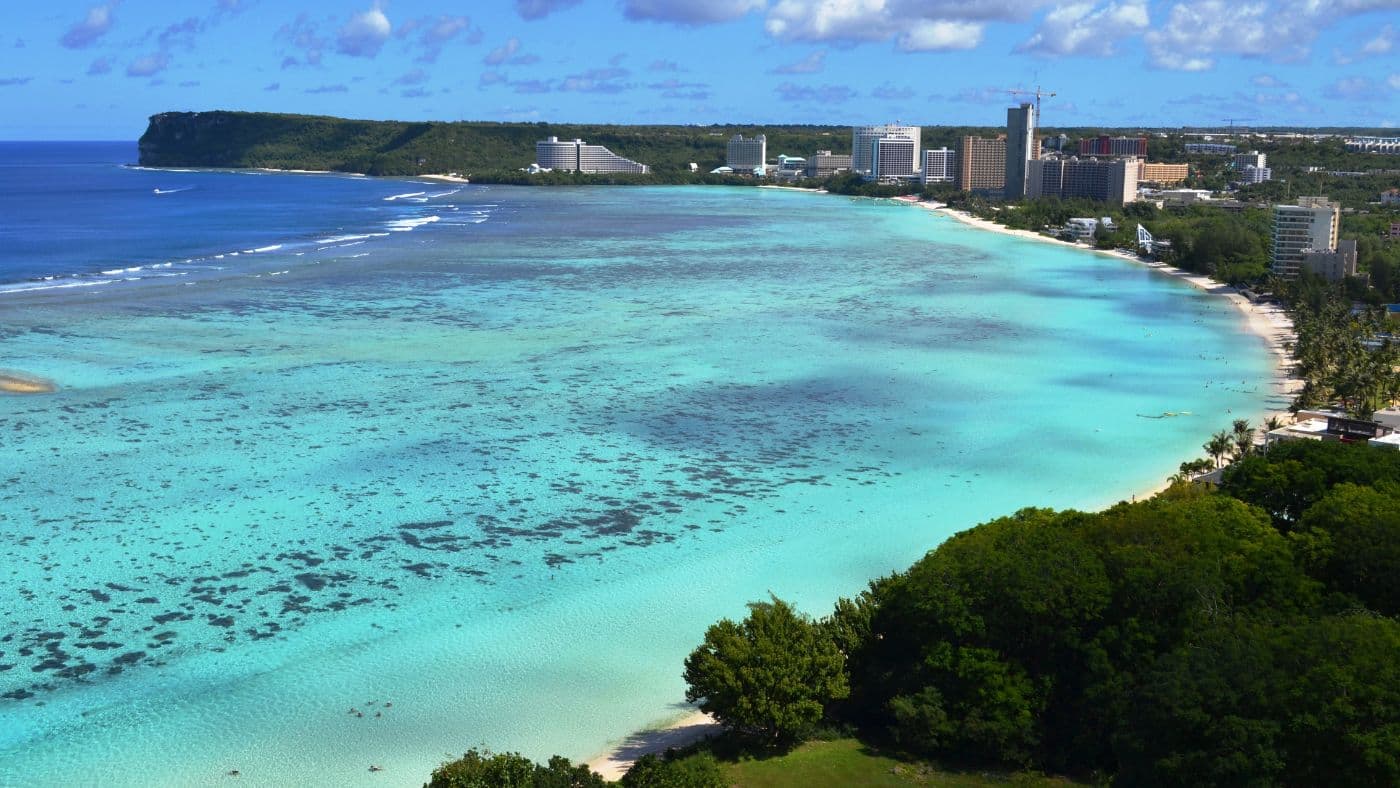
Tumon Bay curves in a perfect arc of powder-white sand and transparent water that shifts from aquamarine in the shallows to deep cobalt offshore. Beneath the surface, Guam's reefs rival anything in the Indo-Pacific: a kaleidoscope of parrotfish, sea turtles, and staghorn coral surrounds every entry point from Ypao Beach to Fish Eye Marine Park. Divers come from across Asia and Japan to explore the Apra Harbor wrecks, including the Tokai Maru and the SMS Cormoran, two ships from different wars that now rest side by side on the harbour floor as a dual national historic landmark.
Flavours, Festivals and the Jungle Interior
Guam's cuisine is a joyful collision of Chamorro tradition, Filipino influence, Japanese refinement, and American comfort. Red rice cooked with achote seeds, kelaguen of lemon-cured chicken or seafood, and coconut-enriched desserts appear at every family table and roadside stall. Beyond the coast, the island's interior holds the Guam National Wildlife Refuge, trails through secondary jungle canopy, and the thundering curtain of Talofofo Falls. The Liberation Day parade each July draws the entire island into a celebration of community, memory, and the enduring Pacific spirit that defines life on Guam.
Official and Indigenous Names
- Territory of Guam (English)
- Teritorion Guåhan (Chamorro)
Region
- Micronesia
Continent
- Oceania
Resident population
168,999
2025 data
Capitals and seats of government
- HagåtñaGUM · Capital
Currency
- United States Dollar (USD · US$)
Driving side
- right side of the road
Electricity
Languages
Chamorro
Official by law · Indigenous · ISO 639-3: cha
English
Official by law · ISO 639-3: eng
Useful phrases in English
- Hello
- Hello
- Goodbye
- Goodbye
- Please
- Please
- Thank you
- Thank you
- Excuse me
- Excuse me
Current time and time zone
Chamorro Standard TimeCHST
Pacific/Guam
Largest cities by resident population
- Dededo · 44,943
2020 data
- Yigo · 20,539
2020 data
- Tamuning · 19,685
2020 data
- Mangilao · 15,191
2020 data
- Barrigada · 9,000
2020 data
Busiest airport by total passengers
- Antonio B. Won Pat International AirportGUM · 1,800,000 annual passenger movements
2019 data