
Castile and León
Autonomous Community of Spain
Out Score
coming soon.
Out Score coming soon.
We're freshly researching the laws for every identity lens against our updated methodology. Castile and León's scores will appear here once they're published.
Learn about Castile and León
Beyond the scoreLearn about Castile and León.Official names, languages, local time and practical context for understanding Castile and León beyond its legal score.
Destination overview
About Castile and León.
Castles on Every Skyline
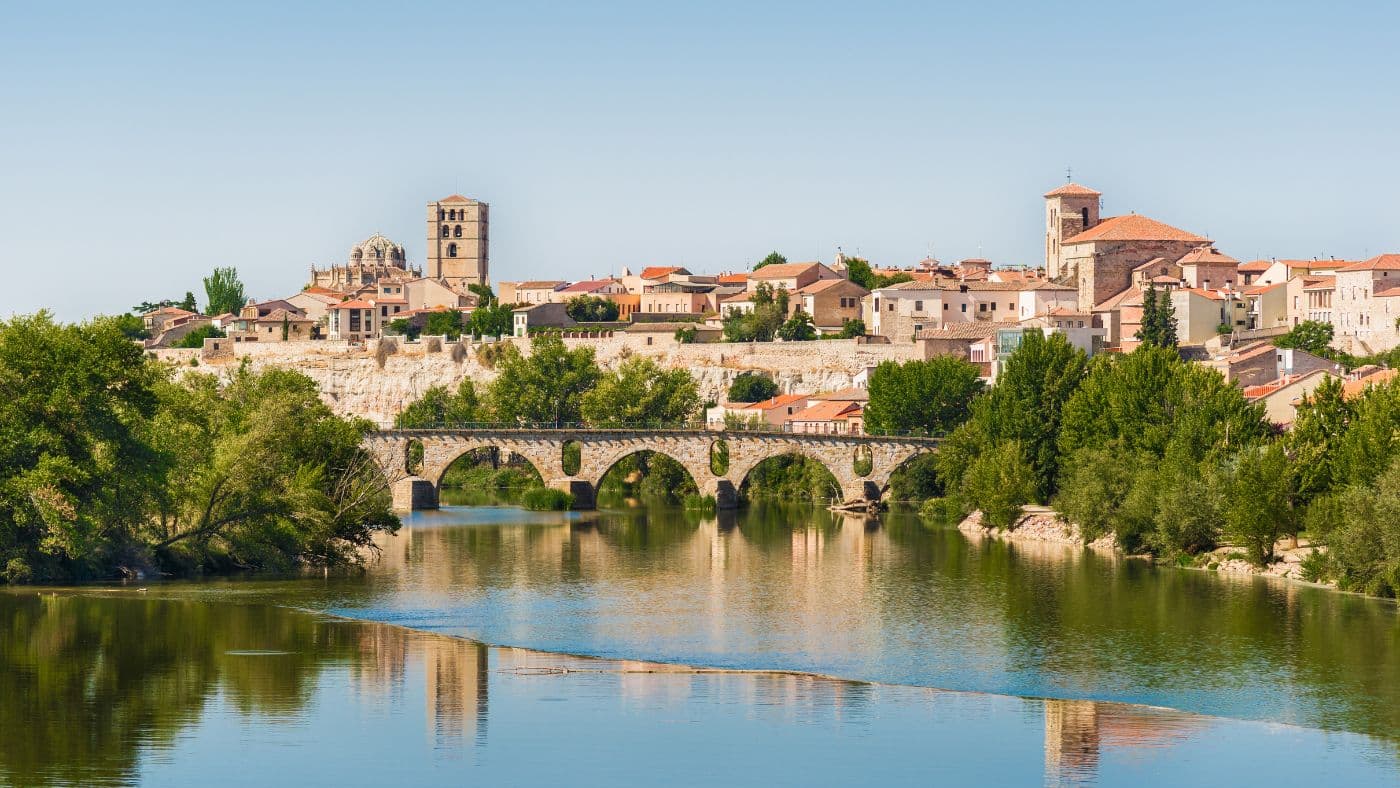
Castile and León takes its name from the fortresses that once bristled across its ridgelines, and the evidence is still very much present. Spain's largest autonomous community by area unfolds across the great northern meseta, a plateau ringed by mountain ranges and threaded by the Duero River on its long journey to the Atlantic. Walled cities rise from the plain with almost theatrical confidence: Ávila's intact Roman walls circle the old town in a single unbroken loop, Segovia crowns its ridge beside a fairy-tale Alcázar and a Roman aqueduct that still looks freshly built, and Burgos anchors its Gothic cathedral over a riverbank with the certainty of a place that was once the capital of a kingdom. The sheer number of Romanesque churches, medieval castles, and UNESCO World Heritage Sites in this one region would comfortably fill the touring itinerary of a smaller country.
Read more about Castile and León
Salamanca and the Art of the Grand Stone
No city in the region announces itself quite like Salamanca, whose buildings are cut from a local sandstone that absorbs light during the day and releases it at dusk in a warm amber glow that has earned the city the nickname La Dorada, the Golden. The Plaza Mayor, completed in 1755, is widely regarded as the finest baroque square in Spain, and sitting at one of its café tables while the arcades fill with students and the stone deepens to honey in the late afternoon is one of those small pleasures that repay travel in full. Salamanca's university, founded in 1218, is among the oldest in Europe, and the academic energy it brings gives the city a liveliness entirely at odds with the solemnity of its monuments. The old and new cathedrals stand side by side, sharing a wall and a thousand years of building ambition.
Roast Lamb, River Wines, and the Meseta Table
The cooking of Castile and León is built around the wood-fired oven and a sincere respect for the animal. Cochinillo, roast suckling pig, and lechazo, milk-fed lamb, are the dishes that define the region's table, cooked in unglazed clay pots in ovens that have been going since before the restaurant existed. The vegetables are understated, the bread is serious, and the wine is increasingly world-class. Ribera del Duero, the denomination that runs along the river valley east of Valladolid, produces Tempranillo-based reds of real depth and age-worthiness, and Rueda, just to the west, turns out some of Spain's most elegant white wines from the Verdejo grape. Eating and drinking well in this region requires only the willingness to sit down and not rush.
The Camino, the Caves, and the Cathedral Towns
The Camino Francés, the most walked pilgrimage route in Europe, crosses Castile and León from Burgos to O Cebreiro, passing through the meseta's wide open stretches that many pilgrims find the most demanding and others consider the most clarifying part of the whole journey. Burgos itself rewards time beyond the Camino crowds: its Gothic cathedral holds the tomb of El Cid and a treasury of medieval art that takes a full afternoon to absorb. A short drive away, the Sierra de Atapuerca conceals cave deposits that have yielded some of the oldest hominin remains ever found in Europe, making this modest hillside arguably the most important prehistoric site on the continent. León's cathedral, meanwhile, fills the nave with some 1,800 square metres of stained glass, creating an interior that seems to dissolve the boundary between architecture and light.
Official and Indigenous Names
- Autonomous Community of Castile and León (English)
- Comunidad Autónoma de Castilla y León (Spanish)
Region
- Iberia
Continent
- Europe
Resident population
2,401,221
2025 data
Capitals and seats of government
- Valladolid · De facto capital (seat of government)
Currency
- Euro (EUR · €)
Driving side
- right side of the road
Electricity
Languages
Spanish Sign Language
Official by law · ISO 639-3: ssp
Spanish
Official in practice · ISO 639-3: spa
Leonese
Indigenous · ISO 639-3: ast
Largest cities by resident population
- ValladolidVLL · 176,551
2024 data
- Burgos · 144,458
2024 data
- Salamanca · 122,866
2024 data
- León · 76,578
2024 data
- Palencia · 74,956
2024 data
Busiest airports by total passengers
- Valladolid AirportVLL · 192,038 annual passenger movements
2024 data
- León AirportLEN · 62,000 annual passenger movements
2024 data
- Salamanca AirportSLM · 20,000 annual passenger movements
2024 data
- Burgos AirportRGS · 2,000 annual passenger movements
2024 data