
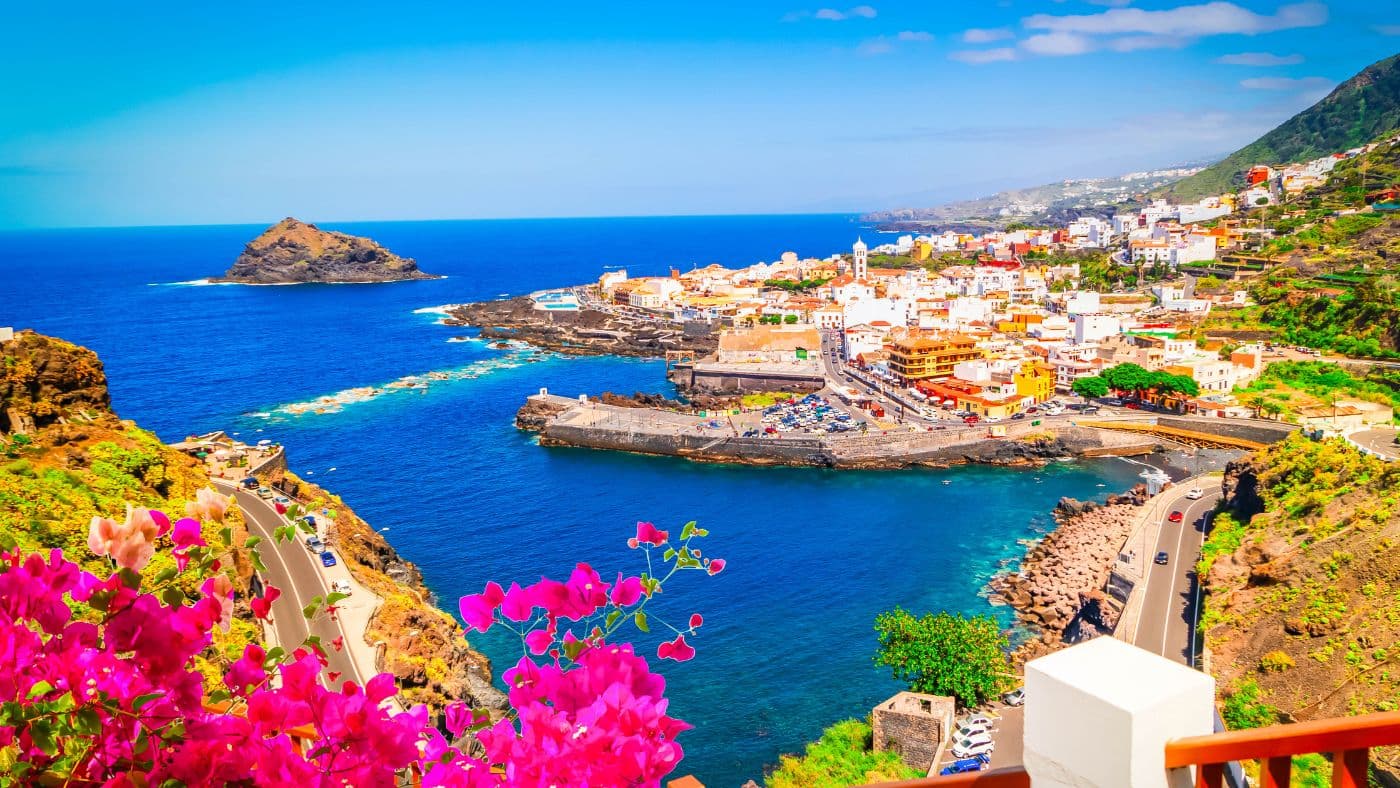
Canary Islands
Territory of Spain
Out Score
coming soon.
Out Score coming soon.
We're freshly researching the laws for every identity lens against our updated methodology. Canary Islands's scores will appear here once they're published.
Learn about Canary Islands
Beyond the scoreLearn about Canary Islands.Official names, languages, local time and practical context for understanding Canary Islands beyond its legal score.
Destination overview
About Canary Islands.
Where the trade winds never stop
Strung across the Atlantic just off the Saharan coast, the Canary Islands sit at a latitude that has nothing to do with northern Europe yet everything to do with why northern Europeans keep coming back. Seven major islands, each shaped by volcanic forces working at their own pace, offer a geology lesson delivered in sunshine. Tenerife lords over the archipelago with Mount Teide, Spain's highest peak, poking through a sea of cloud while the coasts below bake in subtropical warmth. The islands share a climate but little else. Lanzarote looks like a moonscape dressed in vines. La Gomera folds itself into ravines so deep that locals once communicated across them by whistling.
Read more about Canary Islands
Beaches that keep a secret
Gran Canaria has the dunes of Maspalomas, a small Sahara that spills straight into the Atlantic surf. Fuerteventura stretches its windswept shores for so long that surfers treat the whole island as a single break. Lanzarote rewards those who venture beyond the resort strips with black sand bays where the contrast between volcanic rock and turquoise water looks deliberately designed. Then there is La Palma, so quiet and so green that visitors often wonder whether they have taken a wrong turn into a cloud forest. Each island handles tourism differently, and none of them handles it quite the same as its neighbour.
A table that Atlantic and Africa built together
Canarian cooking has a personality entirely separate from mainland Spain. Gofio, a toasted grain flour that the Guanche people relied on long before the Spanish arrived, turns up in bread, soups and desserts with a nuttiness that grows on you. Papas arrugadas, the famously wrinkled small potatoes boiled in salt water, arrive at almost every table alongside mojo rojo and mojo verde, two sauces that locals treat as a fundamental human right. Fresh tuna from the Atlantic, grilled cheese from Fuerteventura and the local honey from La Palma round out a larder shaped by an island chain that sits equidistant between Europe and the tropics.
Carnivals, stargazing and the rest of the year
The Carnival of Santa Cruz de Tenerife is one of the largest in the world, a February spectacle that turns the capital into a parade of sequins, brass bands and very little sleep. Gran Canaria runs its own rival carnival with equal conviction. Outside of festival season, the islands operate as one of the world's finest stargazing destinations: the Teide Observatory sits above the clouds at nearly 2,400 metres, and the darkness up there is absolute. The Canaries never really have an off season. The weather that brings the package tourists in winter brings surfers, hikers and astronomers in every other month, and the islands accommodate all of them without too much fuss.
Official and Indigenous Names
- Canary Islands (English)
- Islas Canarias (Spanish)
Region
- African Atlantic Ocean
Continent
- Africa
Resident population
2,238,754
2024 data
Capitals and seats of government
- Las Palmas de Gran Canaria · co-capital
- Santa Cruz de Tenerife · co-capital
Currency
- Euro (EUR · €)
Driving side
- right side of the road
Electricity
Languages
Spanish
Official by law · Official in practice · ISO 639-3: spa
Spanish Sign Language
Official in practice · ISO 639-3: ssp
Guanche
Indigenous · ISO 639-3: gnc
Current time and time zone
Western European TimeGMT
Atlantic/Canary · Standard GMT, daylight WEST
Largest cities by resident population
- Las Palmas de Gran CanariaLPA · 383,516
2024 data
- Santa Cruz de Tenerife · 211,436
2024 data
- San Cristóbal de La Laguna · 160,258
2024 data
- Telde · 89,036
2024 data
- Arona · 86,624
2024 data
Busiest airports by total passengers
- Gran Canaria AirportLPA · 15,211,338 annual passenger movements
2024 data
- Tenerife South AirportTFS · 13,740,411 annual passenger movements
2024 data
- César Manrique-Lanzarote AirportACE · 8,714,285 annual passenger movements
2024 data
- Tenerife North AirportTFN · 6,762,702 annual passenger movements
2024 data
- Fuerteventura AirportFUE · 6,445,965 annual passenger movements
2024 data