
Karnali
Province of Nepal
Out Score
coming soon.
Out Score coming soon.
We're freshly researching the laws for every identity lens against our updated methodology. Karnali's scores will appear here once they're published.
Learn about Karnali
Beyond the scoreLearn about Karnali.Official names, languages, local time and practical context for understanding Karnali beyond its legal score.
Destination overview
About Karnali.
Nepal's largest, most remote, and most quietly extraordinary province
Karnali Province covers nearly twenty-eight thousand square kilometres of the most geographically severe terrain in Nepal, from the high-altitude desert districts of Humla and Dolpa on the Tibetan plateau to the mid-hill river valleys carved by the Karnali and Bheri rivers as they descend southward. With fewer than 1.7 million people spread across an area the size of a small European country, the population density is the lowest in Nepal, and outside the capital Birendranagar there are districts where the concept of a road connecting the village to the outside world is still recent enough to be remarked upon. This is not a province that competes with anywhere else in Nepal for visitors. It has no need to.
Read more about Karnali
Rara Lake and the Shey Phoksundo: Nepal's most beautiful water
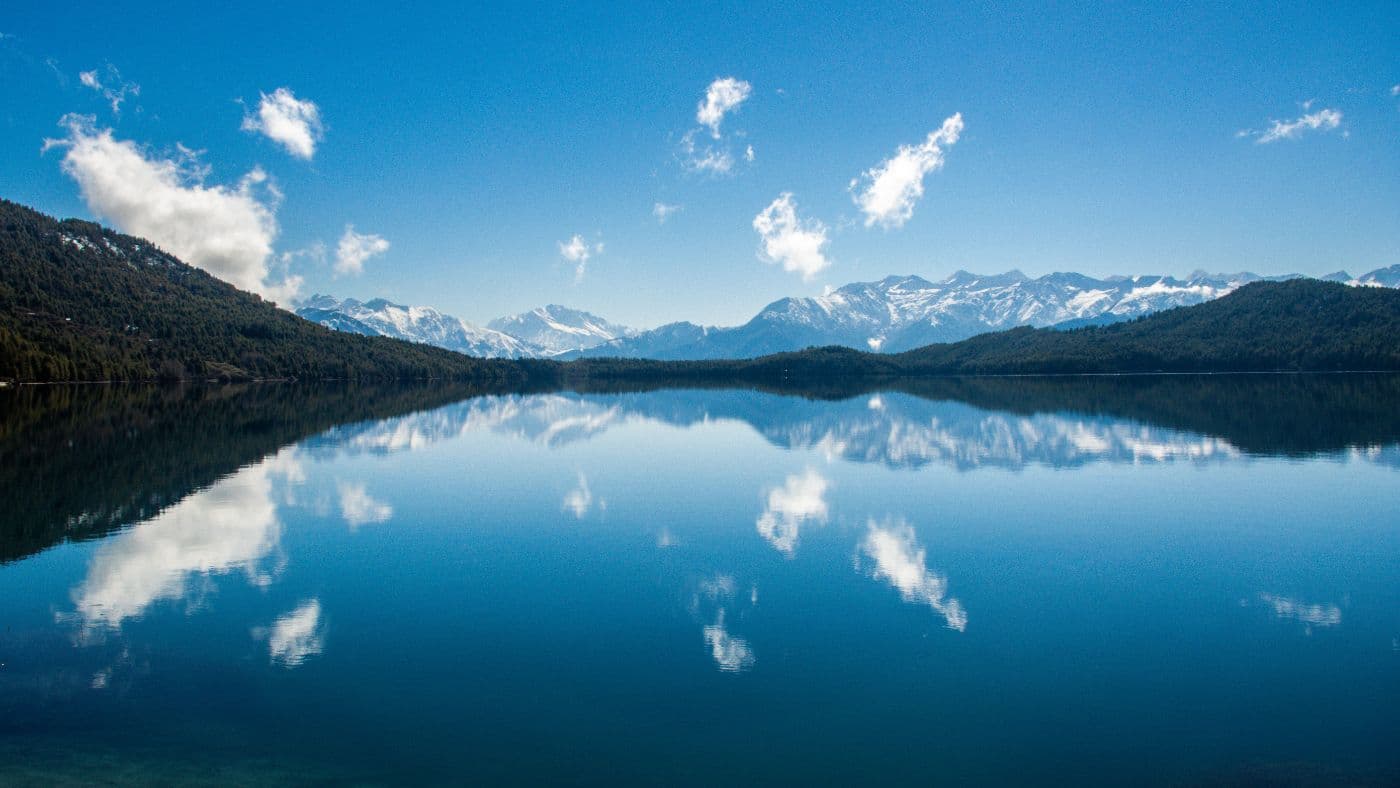
Rara Lake in Mugu District is Nepal's largest lake, sitting at 2,990 metres in a bowl of pine forest with water of a colour that defeats description: somewhere between cobalt and lapis, shifting with the light in a way that photographs consistently fail to capture. The surrounding national park protects red panda, Himalayan black bear, and musk deer in forests that feel genuinely untouched. To the south in Dolpa District, Shey Phoksundo Lake is Nepal's deepest, its turquoise surface enclosed by a gorge of red and ochre rock and overlooked by the Shey Gompa monastery. Reaching either requires either a flight to a high-altitude airstrip followed by days of trekking, or considerably more days of trekking. Both journeys are worth every step.
Dolpo, Humla, and the Tibetan Buddhist highland
The northern districts of Karnali constitute one of the last intact Tibetan Buddhist cultural zones outside Tibet itself, a consequence of geography that has slowed outside influence to a pace that the communities there have been able to absorb on their own terms. Dolpa, the largest district in Nepal by area, was the setting for David Snellgrove's foundational ethnographic work on Tibetan religion in the 1950s and for Eric Valli's film The Himalaya in the 1990s; it retains the high-pasture transhumance, the salt trade routes, and the monastery complexes that both documented. Humla, bordering Tibet to the north, is the remote district most closely associated with the ancient pilgrimage route to Mount Kailash, which continues across the border for Hindus and Buddhists alike.
Sinja Valley and the origins of the Nepali language
In the lower elevations of Jumla District, the Sinja Valley holds the ruins of the medieval Khasa Kingdom, which expanded from this base in the thirteenth and fourteenth centuries to encompass territories stretching from Garhwal to western Tibet. The Khas language that evolved in this valley became the direct ancestor of modern Nepali, making Sinja one of the linguistic origin points of the language that more than a quarter of Nepal's population now speaks as a mother tongue. The valley's apple orchards, its ancient stone temples, and the measured pace of a district that remains accessible only by air or a multi-day walk give Jumla a particular quality of stillness that travellers who make the effort tend to find genuinely restorative.
Official and Indigenous Names
- Karnali Province (English)
- कर्णाली प्रदेश (Karnali Pradesh) (Nepali)
Region
- South Asia
Continent
- Asia
Resident population
1,688,412
2021 data
Capitals and seats of government
- BirendranagarSKH
Currency
- Nepalese Rupee (NPR · रु)
Driving side
- left side of the road
Electricity
Languages
Magar
Official by law · Official in practice · Indigenous · ISO 639-3: mgp
Nepali
Official by law · Official in practice · ISO 639-3: nep
Nepalese Sign Language
Official in practice · ISO 639-3: nsp
Tibetan
Indigenous · ISO 639-3: bod
Current time and time zone
Nepal TimeNPT
Asia/Kathmandu
Largest cities by resident population
- BirendranagarSKH · 154,886
2021 data
- Tulsipur · 59,000
2021 data
- Khalanga · 18,000
2021 data
- Chandannath · 15,000
2021 data
- Salyan Bazar · 12,000
2021 data
Busiest airports by total passengers
- Surkhet AirportSKH · 52,000 annual passenger movements
2019 data
- Jumla AirportJUM · 18,000 annual passenger movements
2019 data
- Simikot AirportIMK · 12,000 annual passenger movements
2019 data